The difference between Matcha and Hojicha
Updated: Aug 12, 2025
Hojicha and matcha are two Japanese green teas offering unique flavors, aromas, and health benefits. Japanese tea culture offers a rich variety of flavors and traditions, but two of the most popular teas are Matcha and Hojicha. Knowing the differences between hojicha and matcha can help you choose the right one.
Both teas offer unique flavors and aromas influenced by their processing methods. Whether you prefer the soothing, smoky flavor of hojicha or matcha's vibrant, energizing taste, each tea offers something unique.
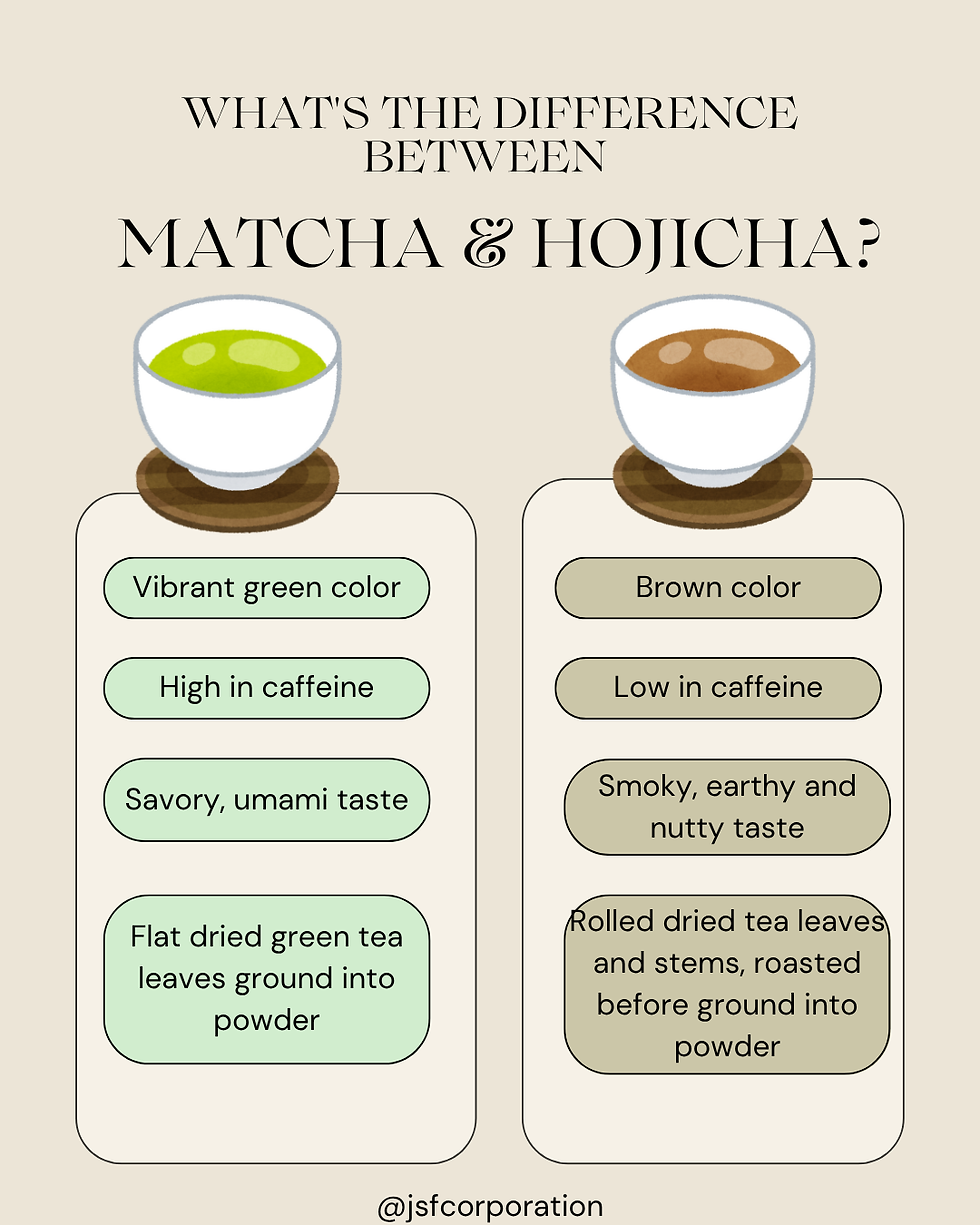
Production While both Matcha and Hojicha come from the same tea plant, their production methods create distinctly different flavors, aromas, and appearances.
Matcha is made exclusively from tender young tea leaves, which are carefully stone-ground into a vibrant, fine powder.
Hojicha, on the other hand, is crafted from mature tea leaves, along with stems and stalks, that are gently roasted. After roasting, the tea can be enjoyed as loose leaves or ground into a powder.
Caffeine
Here’s where the contrast really shows:
Matcha contains more caffeine than Hojicha, making it a powerful energy booster.
Hojicha's plant parts are naturally lower in caffeine—and the roasting process reduces it even further.
Health Benefits
Both teas are packed with antioxidants, but their compositions differ slightly:
Matcha supports metabolism, immune health and antioxidant protection.
Hojicha also contains antioxidants, but in a different balance, and its lower caffeine makes it suitable for children, the elderly, or anyone avoiding caffeine.
Flavor Profiles
Matcha has a bold, umami-rich taste with a creamy texture, making it perfect for both traditional tea ceremonies and modern lattes.
Hojicha delivers a smooth, earthy flavor with roasted, caramel-like notes. Used for both desserts and lattes.
Matcha is vibrant, energizing, and bold. Hojicha is mellow, soothing, and gentle. Whether you’re a tea enthusiast or just starting to explore Japanese teas, understanding these differences will help you appreciate each cup even more. What will be your next choice?


Comments